More from Ashkenaz 2014: Forshpil, Geoff Berner
Before memories of this year's Ashkenaz Festival totally dissipate, I wanted to continue my mentions of several notable bands and musicians encountered there.
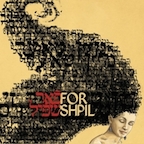 First up is Forshpil, from Riga, Latvia. Although they performed a couple of traditional klezmer/yiddish sets at the obligatory "Bella Did ya eat?" brunch at the FreeTimes Cafe, the band is much more "rock-klezmer" fusion. In fact, the opening "Volekhl" on their eponymous 2012 CD immediately attracts the ears, sounding like an improbably successful marriage between Hawkwind and traditional klezmer. From there, it's on to a funk-infused "Priv Trink Oys." Despite the quite, gentle rendition of "Di sapozkelekh" or the closing "Dobranotsh," and although there are reggae and jazz influences, the dominant sound is that opening "heavy metal progrock" feel, along with a certain Dick Dale-inspired speed guitar picking, as on "Meyld in di yorn." In this, the band reminds me not a little of "Yiddish Princess." The diversity continues to good effect. Like so much good klezmer-and-more recordings these days, you can get your copy at CDBaby.com, where you can also listen to samples of each of the songs.
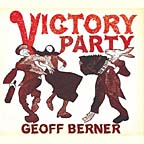 Geoff Berner's 2011 "Victory Party" is a different kettle of fish. A long-time stalwart of the Canadian folkie scene, this is his sixth recording. Berner is often compared to Daniel Katz for the social commentary and (in Berner's case, relatively rare) Yiddish or klezmer inflections in his music. You can hear their similarities in songs such as "Laughing Jackie the Pimp" and in a very nicely contextualized "Daloy Polizei," also covered by Kahn (especially timely this year--and now that I think about it, all too often). At the same time, where Kahn both incites to action and expresses an ennui (this, too, will not ultimately change the world), Berner more often seems a bit more of a commentator, distant. His "Mayn rue platz" is less a call to action, than an evocation of sadness. But, we speak of relativity. "I am going to jail / to get a new pair of shoes" ("Jail") pulls few punches, despite its jaunty tune. "Oh my golem" is likewise fairly direct commentary. "Did you really think a perfect god / wants you to burn a goat / or nail the Messiah in place" from "Rabbi Berner finally reveals his true religion" may be gentle, but it's a call to action, nonetheless (smirk included).
In addition to performing at Ashkenaz, Berner was interviewed by DJ SoCalled (who also produced "Victory Party") at the Festival about his relatively recent short novel, Festival Man. Advertised as a hard-hitting satire about the Canadian Folk Festival scene, the book is actually a bit of a fond love poem to same—satire included, and a pleasure to read.
 Let's start with a review of David Buchbinder's brilliant collaboration with Cuban musician Hilario Durán,
  If, like me, you are as captivated by Balkan brass rhythms as by klezmer, you will be very interested in Simon's review of this new entry from Seattle:
  Finally, and sticking closer to home, Simon catches the latest of a series of Israeli jazz artists who have come to call New York their home,
 Chaverim,
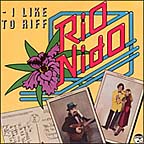 Back in 1978, newly returned from Israel, I settled in to Santa Cruz, California. A local record store had this amazing LP that captured my ears for ages. By a band called "Rio Nido" (is that a pun?), it was called "I like to riff." It's one of the few LPs still occasionally played in this house of mp3s and CDs. I have wanted this music on CD for many, many years. Now, it's here. Rio Nido's first two CDs (I'm more a fan of the first, which is more deeply rooted in that '20s and '30s jazz-blues territory now being mined so effectively by Saskatchewan's
  It started with a new Rough Guide release, this time,
  The problem was that I got so wrapped up in the first CD, that I had to spend time with that Idan Raichel CD that I've been meaning to write about for years: 2002's
  By now I was in trouble, so I also polished off a review of the relatively recent release of the final album by Israeli jazz masters, The Platina:
  There is something about Philadelphia Jews. I've said this before, but with the release of
  The 10th Anniversary of the first Masada material has prompted a wonderful re-examination of that work by a wide variety of artists. I confess to being among the few who find Zorn's Masada okay, but don't have a great need to own each volume. On the other hand, listening to Jon Madof and his noisemakers, er, Rashanim, transform some of the material is entirely different. 2005's
  Ladies and gentlemen, for another take on the extraordinary John Zorn/Masada material, may I offer you the totally flipped, amazing
  And, finally, in a nod to everything that I didn't have time to listen to today, all of which is at least htis good, I offer one last fusion, the world music band Asefa, house band to Sam Thomas' Brooklyn-based "Jewish Awareness through Music" organization.
  George Robinson writes frequently for the Jewish Week. He listens to an incredible diversity of music. Take a read of
  Jewish-music mailing list member Michael Makiri caught this last summer. I'm just catching up. But when you're done reading the article, do check out the blog of the reissue folks. It's great!
 Freylach Time!, based in the Research Triangle area of North Carolina is a tradtional klezmer gem. It is also a community treasure. Now that the band has finally recorded, you can hear for yourself:
  London's Oi Va Voi has been impressing audiences from the UK to KlezKamp and everywhere in between for years. Whatever they are playing, it isn't klezmer any more, except insofar as it gets people up to dance. This new album, "Laughter Through Tears" just made the New York Time's "10 Best" list for 2003. For a change, I agree!:
 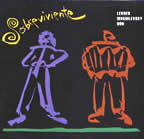 César Lerner and Marcelo Moguilevsky are two amazing musicians from Argentina. I've seen them perform in the UK and Canada. Now you can year why audiences love them and their brand of passionate klezmer infused with South American jazz. The new album, Sobreviviente, is live:
  A year with a new release from the Klezmer Conservatory Band is a good year. This latest contains many new gems - more than a taste of paradise: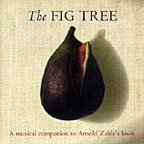

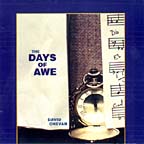
 I got carried away. CDs were falling off the shelf, so I sat down this weekend and stayed sat down until I got several reviewed. We've got some great new Jewish music, some avant garde and jazz, some klezmer (lots of klezmer), some Sephardic and Mizrahi music, more klezmer and Yiddish folk.... That's not the whole gamut, but odds are that something in this weekend's stack will be just what you were looking for:
 One of my favorite "traditional" klezmer albums these past few months has been a delightful album from the Montreal-based band, Shtreiml. What makes this unusual, and causes me to put the word "traditional" in quotes is the use of the harmonica as the primary solo instrument. Once you hear the music, however, I trust that you, too, will be a
  An old friend, Craig Johnson, was in town recently to attend NEFFA (New England Folk Festival Assocation) last week. It was a glorious NEFFA year--lots of Yiddish and Klezmer music and dancing and Jewish storytelling. The usual array of other folk traditions, Craig's included, were also represented in glorious profusion.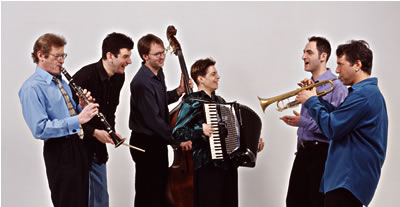
 A most fascinating concert is coming up on Mar 26th at UConn/Storrs. Yiddish folk-rocker Wolf Krakowski headlines, backed with the Lonesome Brothers. Also on the bill is Mawwal, described as a "Middle Eastern roots music" with violin wizard Alicia Svigals making a guest appearance.
 It's been a very fun week. There are new reviews up demonstrating, once again, the absurd bread of interesting music that is being sent to the KlezmerShack:
 The new Theresa Tova CD, "Live at the Top o' the Senator" is a jazz singer's delight. The KlezmerShack review is up at